Heat Pump vs Furnace: Which Makes Sense Before Winter?
September 28, 2026
Knowledge share by
Collin Hickox
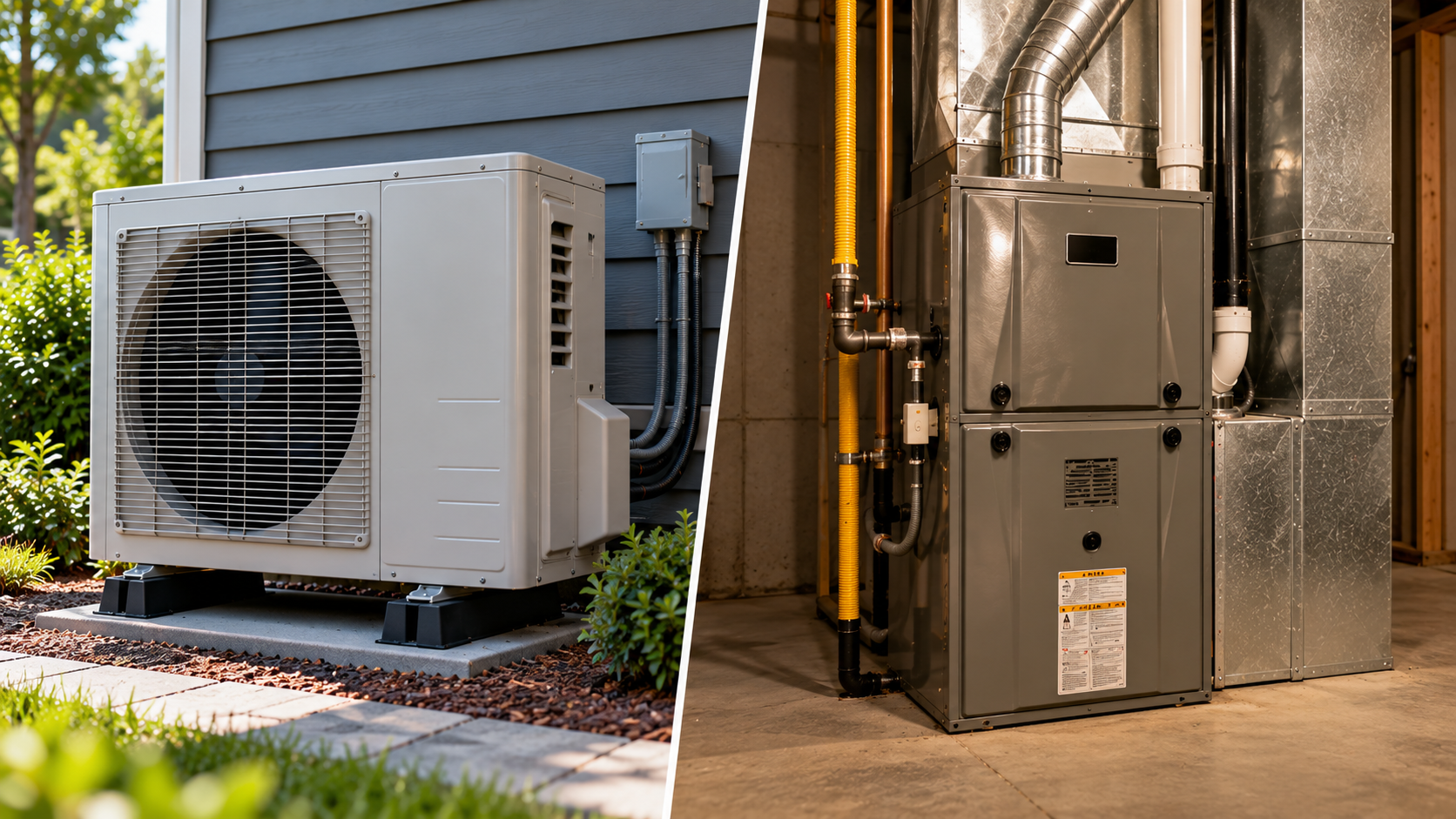
Heat pump vs furnace: If your heating system struggled last winter, September is a good time to compare your options. You have room to consider comfort, installation costs and energy use before cold weather makes the decision urgent.
For homeowners in north central Connecticut and central Massachusetts, either system can make sense. The right choice depends on your home’s heating needs, existing equipment and available energy sources.
Heat pump vs furnace: What’s the Difference?
A heat pump uses electricity to move heat between your home and the outdoors. It provides heating in winter and reverses operation to cool your home in summer.
A fuel-burning furnace generates heat using natural gas, propane or oil, then distributes warm air through ductwork. It provides heating, while a separate air conditioner handles summer cooling.
| Consideration | Heat Pump | Fuel-Burning Furnace |
| Heating and cooling | Provides both | Provides heating only |
| Energy source | Electricity | Natural gas, propane or oil, plus electricity for components |
| Heat distribution | Ducted or ductless options | Typically uses ductwork |
| Winter planning | Requires equipment selected for local temperatures and heating demand | Requires proper sizing, fuel supply and venting |
| Operating costs | Depend on electricity rates, outdoor temperatures and system performance | Depend on fuel prices and system efficiency |
Heat pumps are available in several configurations, so comparing specific equipment matters more than choosing a category based on reputation alone. The U.S. Department of Energy explains the main options in its overview of heat pump systems.
Can a Heat Pump Handle a New England Winter?
Yes, a properly selected cold-climate heat pump can heat a home during a New England winter. However, the system must be matched to the home’s heating requirements and its expected outdoor temperatures.
The important question is how much heat the proposed equipment can deliver when temperatures fall. Whether supplemental heating is needed depends on that capacity, the home’s heat loss and the installation design.
Ask your contractor to explain:
- The system’s heating output at low outdoor temperatures
- Whether it can meet your home’s full heating demand
- What supplemental heat, if any, is included
- How the controls will manage colder conditions
ENERGY STAR recommends proper sizing and evaluating potential backup heating when selecting a cold-climate system.
When a Heat Pump May Make Sense
Your Heating and Cooling Equipment Both Need Attention
If your furnace and central air conditioner are approaching replacement, evaluate them together. A heat pump may address both needs within one coordinated project.
That makes a whole-system comparison more useful than comparing a furnace-only quote with a heat pump installation that also replaces your cooling equipment.
You Want to Add Comfort Without Extending Ductwork
A ductless heat pump may be worth considering for a home without ducts or a room that existing equipment does not serve well. It can also provide cooling to spaces that previously relied on window units.
Your contractor should still assess the room layout and how conditioned air will reach the areas you use. One indoor unit should not automatically be assumed to heat every room on a floor.
When a Furnace May Make Sense
Your Existing Setup Supports a Straightforward Replacement
If your home already has suitable ductwork, an available fuel supply and a central air conditioner in good condition, a furnace replacement deserves consideration. Ask what changes would be needed to the venting, drainage and controls.
A familiar type of equipment can still require installation updates. The written estimate should explain those requirements.
You Want to Compare Costs Using Your Actual Fuel Bills
Neither system is automatically cheaper to operate in every home. Your electricity rate, fuel price, equipment efficiency and heating demand all affect the result.
Bring recent utility or fuel bills to the consultation. Ask for a comparison that identifies its assumptions, including any supplemental heat use, rather than relying on a blanket savings claim.
Could a Dual-Fuel System Be the Right Fit?
A dual-fuel system pairs an electric heat pump with a fuel-burning furnace. Controls select the heating source according to the system’s setup and operating conditions.
This may be worth discussing if your furnace still has useful life but your central air conditioner needs replacement. Equipment compatibility and control settings need professional evaluation.
What to Check Before Choosing Your Heating System
Start with the house itself. Drafts, insufficient insulation and duct problems can affect comfort regardless of which equipment you install.
A heating assessment should consider:
- Heating demand: How much heat your home needs during cold weather
- Existing distribution: Whether ducts or proposed indoor units can serve each space
- Installation requirements: Electrical capacity, venting, drainage and equipment placement
- Comfort problems: Rooms that are consistently too hot or too cold
- Total project scope: Equipment, installation work and any necessary upgrades
A professional load calculation helps establish the appropriate equipment size. Improving insulation and air sealing can also reduce the heating load, which may change the equipment your home needs.
Compare Your Options Before Winter Arrives
Fall gives you time to ask questions, review complete estimates and plan installation around your household. Start the conversation now if last winter brought repeated repairs, uneven temperatures or trouble keeping the house comfortable.
Stafford Mechanical Services helps property owners across north central Connecticut and central Massachusetts evaluate their heating needs.
Contact Stafford Mechanical Services today to schedule a heating consultation and find out whether a heat pump, furnace or dual-fuel system makes sense for your home or commercial property.
Latest News
Hot Water Runs Out Fast? Fix the Morning Shower Shuffle
Hot water runs out fast when everyone needs a shower before school and work. The first person gets steam, the second gets lukewarm water and…
End-of-Summer AC Maintenance Checklist
End-of-summer AC maintenance gives homeowners an opportunity to check their cooling systems after months of demanding work. Even if your air conditioner made it through…
Sewer Backup After Heavy Rain? Here’s What to Do Next
A sewer backup after heavy rain can quickly turn a wet-weather inconvenience into a serious property and health concern. When wastewater enters a basement, shower,…