Central Air vs. Ductless Mini-Split: Which Cooling System Is Right for You?
April 30, 2026
Knowledge share by
Collin Hickox
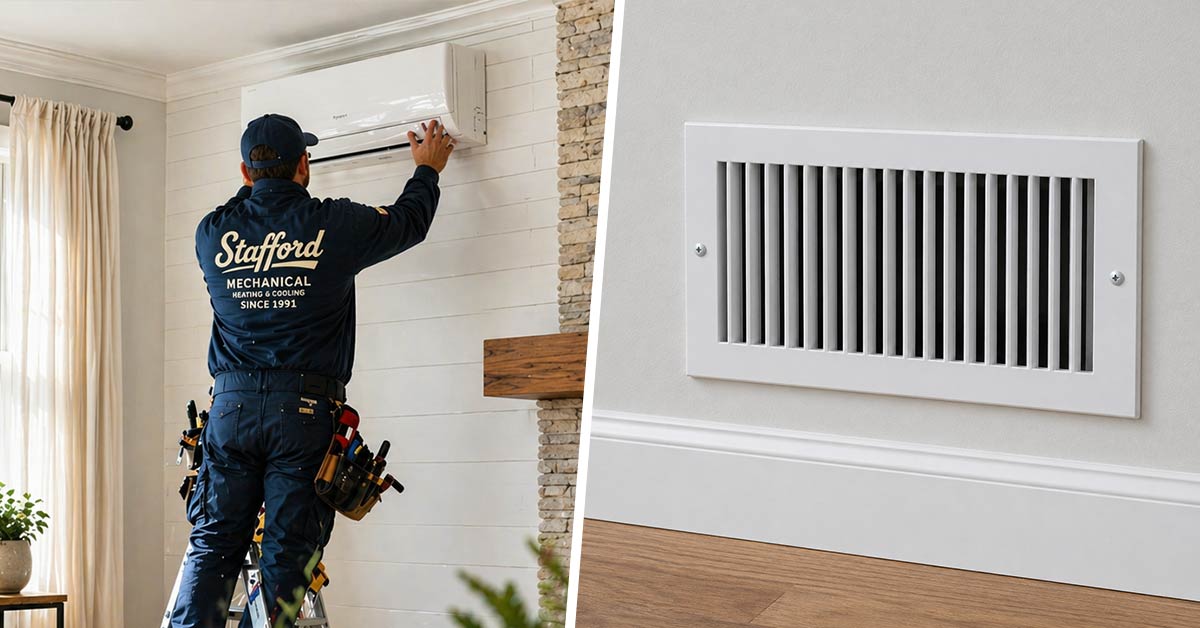
When comparing central air vs ductless, the right choice depends on your building, usage and long-term goals. Both systems can deliver reliable cooling, but they operate very differently and are best suited for different environments.
At Stafford Mechanical Services, we help property owners, facility managers, landlords and asset managers make informed decisions based on performance, efficiency and cost. This guide breaks down the key differences so you can choose the system that fits your needs.
How Central Air Conditioning Works
Central air conditioning uses a network of ducts to distribute cooled air throughout a home or building. A single outdoor unit connects to an indoor air handler, pushing conditioned air through vents in each room.
This system works well in buildings that already have ductwork in place. It provides consistent cooling across large areas and allows for simple thermostat control.
However, older, outdated or neglected duct systems can introduce inefficiencies. Air leaks, poor insulation and long duct runs can reduce performance and increase energy costs.
How Ductless Mini-Split Systems Work
Ductless mini-split systems consist of an outdoor unit connected to one or more indoor air handlers. Each indoor unit serves a specific zone and can be controlled independently.
This zoned approach allows you to cool only the areas you are using. It eliminates duct losses and gives you greater systems wide control over temperature settings in different areas.
Ductless systems are often used in homes without existing ductwork, additions, older properties or spaces with unique layout challenges. These systems are highly beneficial and cost-effective, delivering exceptional energy efficiency that can significantly reduce utility costs. Many installations qualify for state-sponsored rebate programs like MassSave and Energize CT, which reduce the upfront cost and maximize outcomes for end users.
Central Air Vs Ductless: Key Differences
When evaluating central air vs ductless, there are several factors to consider.
Installation requirements differ significantly. Central air often requires duct installation or modification, which can add time and cost. Ductless systems require only a small wall penetration for refrigerant lines, making installation faster and less invasive.
Energy efficiency is another major factor. Ductless systems tend to be more efficient because they avoid duct losses and allow for zoned cooling. Central air can still perform well, but efficiency depends heavily on the condition of the duct system.
Comfort and control also vary. Central air provides even cooling across the entire building, which works well for open layouts. Ductless systems offer room-by-room control, which can improve comfort and reduce energy waste.
Cost Comparison: Upfront and Long-Term
Initial cost often plays a major role in the decision. Central air systems may be more cost-effective if ductwork already exists and is in good condition. However, installing new ducts can significantly increase the total project cost.
Ductless systems typically have higher equipment costs per zone, but installation is simpler and oftentimes completed within a day or two. In many cases, ductless systems often qualify for state-sponsored rebate programs like MassSave in Massachusetts or Energize CT in Connecticut, which can substantially reduce upfront costs.
Over time, ductless systems can offer lower operating costs due to higher efficiency and zoning capabilities. When combined with available rebates and incentives, the total cost of ownership becomes even more attractive. Central air systems can also be a cost-effective solution when properly maintained and optimized.
Best Applications for Each System
Central air is often the best choice for larger homes, commercial spaces and buildings with existing ductwork. It provides consistent cooling and integrates easily with traditional HVAC systems.
Ductless systems are ideal for older homes without ducts, additions, offices with varying occupancy and spaces that need independent temperature control. They are also a strong option for improving comfort in problem areas where central systems fall short.
Maintenance and Longevity
Both systems require regular maintenance to perform at their best. Central air systems need duct inspections, filter changes and seasonal servicing. Ductless systems require filter cleaning and routine checks of indoor and outdoor units.
When properly maintained, both systems can provide long service life. The key is working with a qualified HVAC partner who understands system design, installation and ongoing care.
Making the Right Decision
Choosing between central air vs ductless is not a one-size-fits-all decision. It depends on your building layout, budget, comfort preferences and long-term energy goals.
Working with an experienced HVAC partner like Stafford Mechanical Services ensures the system is properly sized and installed.
At Stafford Mechanical Services, we take a consultative approach to every project. We evaluate your space, identify your priorities and recommend solutions that deliver reliable performance and long-term value.
Since 1991, we’ve been the trusted partner for heating and cooling, serving commercial and residential clients for all HVAC and plumbing needs across northern Connecticut and western Massachusetts.
If you’re thinking about a new cooling system or just want to explore your options, feel free to reach out to the team at Stafford Mechanical Services. We’re here to help you figure out what makes the most sense for your home or business.
Latest News
End-of-Summer AC Maintenance Checklist
End-of-summer AC maintenance gives homeowners an opportunity to check their cooling systems after months of demanding work. Even if your air conditioner made it through…
Sewer Backup After Heavy Rain? Here’s What to Do Next
A sewer backup after heavy rain can quickly turn a wet-weather inconvenience into a serious property and health concern. When wastewater enters a basement, shower,…
Why Is My Home Experiencing Low Water Pressure?
Low water pressure is one of the most common plumbing complaints homeowners experience. Whether you're taking a shower, washing dishes or filling a pot at…